Junk Clearance in your area for homes, landlords and businesses

We provide junk clearance in your area for customers who need unwanted items removed with minimal fuss and a clear, practical approach. That can include mixed household clutter, old furniture, appliances, bagged rubbish, and a wide range of general waste that has built up over time. Our service is designed to help people move from an overfull space to a tidy one, while keeping the work straightforward and focused on what actually needs taking away.
Because different jobs involve different kinds of materials, we keep the process flexible. Some clearances are a single-item visit; others involve several rooms, a loft, a garage or a full property. We handle both one-off clearances and recurring commercial removals where a site needs regular attention. If you are arranging work for a home, rental property, office or storage space, the main aim is the same: remove the load safely, sort it sensibly and leave the area ready for its next use.
To help us quote accurately, it is useful to note the type of items involved, approximate quantity and how easy the space is to access. A few photographs can also make the scope easier to judge, especially for larger loads or mixed waste. Clear details at the start usually save time later, and they also help us recommend the most suitable clearance route. When you are ready, send over the basics and ask for a quotation.
Household and domestic junk clearance
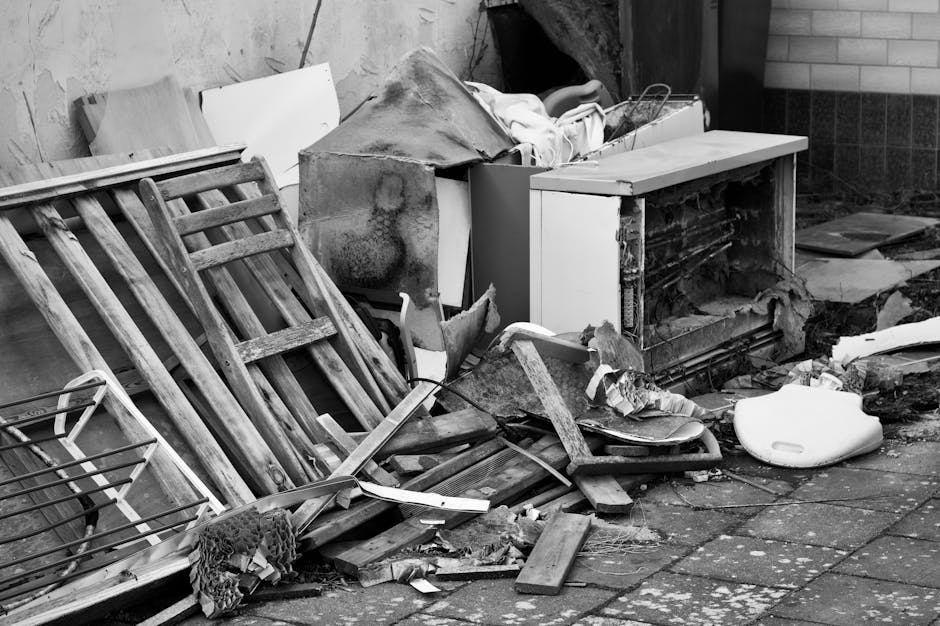
Domestic junk clearance often covers the sort of items that gradually take over spare rooms, hallways, lofts and sheds. That may include old wardrobes, broken chairs, boxes of miscellaneous items, mattress waste, worn soft furnishings and general clutter that no longer has a place in the home. We also clear bulky items that are difficult to move without planning, making it easier to deal with them safely rather than trying to shift them piece by piece.
For many households, the main decision is whether the job is better treated as a small collection or a broader property clearance. A focused collection suits a few bulky pieces, while a fuller service works better when several areas need sorting at once. If items are still usable, some customers prefer to separate them before the visit; if not, the work can be organised as a straightforward removal. Either way, the aim is a tidy finish and a sensible way to manage the load.
We can also support clear-outs linked to moving, renovating or simply reclaiming room that has been used for storage. In those cases, the value of the service is not just removal but making the space workable again. A careful sequence matters: identify the items, decide what is staying, then clear what needs to go. Please get in touch for a quotation if you would like help with a domestic clearance.
Furniture, mattresses and large-item removal
![A cylindrical metal rubbish bin filled with an assortment of plastic buttons in various sizes, shapes, and colours including blue, black, white, green, and brown. The bin is positioned outdoors on a paved surface, with the lid removed and placed to the side, exposing the densely packed buttons inside. The background is plain white, emphasizing the collection of buttons and the metallic finish of the bin, which shows some signs of wear and age. This image relates to rubbish collection services provided by Junk Clearance in the UK, highlighting the type of small household waste that the company can help manage and dispose of efficiently in towns and suburbs across the region, including areas close to postal code regions like [POSTCODE].](/pub/_photos/rubbish/f1484014024.jpg)
Large-item removal is often the most awkward part of junk clearance because sofas, beds, wardrobes and other heavy pieces are hard to manoeuvre through doors, stairwells and tight landings. We handle furniture removal and collection with that practical difficulty in mind, so the process can be organised around the item size, access route and any special handling needs. This is useful when a room needs to be emptied quickly and the furniture is too large for ordinary household disposal.
We also deal with mattress disposal and sofa removal, which are among the most commonly requested bulky items. These jobs are usually simpler when the item is already accessible, but some need extra care because of basements, upper floors or narrow internal access. The key point is not only that the item is removed, but that it is done in a way that respects the property and avoids unnecessary disruption. If several large items are involved, bundling them into one visit can be more efficient than arranging separate collections.
For customers comparing options, it helps to think about what kind of items dominate the job. A set of heavy furniture pieces points towards a larger clearance, while one or two beds or sofas may fit a more targeted removal. Where possible, list any items that are especially large, awkward or partly dismantled so the work can be planned properly. Accuracy at this stage makes the quotation process much smoother.
Property clearances for homes, flats and estates
Property clearance is a broader service for places that need more than a simple collection. We may be asked to clear an entire house, a flat, a probate property or a rental that has been left with a mixture of furniture, possessions and waste. In these situations, the work is less about one item and more about restoring order across a wider space. It can include sorting, moving and removing contents room by room.
Within domestic property clearance, timing and access are usually the main planning points. Top-floor flats, shared entrances and limited parking can all affect how the job is approached. It is also common for customers to want some items left behind, which means the clearance needs to be selective rather than total. We can work from a list or from a simple walk-through description, as long as the boundaries are clear. That keeps the process organised and avoids mistakes about what should stay or go.
When a property has been occupied for a long time, the load can be mixed and sometimes cluttered in ways that make the work more involved than expected. In those cases, it can help to separate the job into obvious categories: furniture, bagged waste, white goods and loose household items. If you are weighing up a full clearance, speak to us about the scope and request a quotation based on the actual contents.
Garage, loft and storage-space clearance

Garages and lofts often become the place where things are kept because they are not needed every day, not because they are still useful. Over time, that can leave a space full of broken tools, seasonal decorations, old boxes, gym equipment, spare furniture or long-forgotten household items. Our garage clearance and loft clearance work is aimed at removing that build-up in a practical way, so the room can be used properly again.
These jobs usually benefit from a clear decision about access before the work begins. Loft spaces may involve ladders or limited headroom, while garages can contain a mix of recyclable items, garden tools and bulky household goods. We do not need every item categorised in advance, but knowing the broad type of contents helps us plan the clearance sensibly. If the space is packed tightly, it may be better to describe the job by how full the area is rather than by item count alone.
Storage-space clearances often reveal a useful choice: whether to clear everything in one go or remove only the bulky material that is causing the blockage. For some customers, the best result is a complete emptying; for others, a partial clearance frees up enough room to reorganise the rest. Either way, the work should be defined clearly so the outcome matches what you want. You can ask for a quotation once the main contents are identified.
Garden and outdoor waste removal
Garden clearance covers outdoor waste that can build up after pruning, landscaping or a period of neglect. That may include branches, hedge cuttings, soil, broken planters, timber, old garden furniture and mixed outside debris. We also handle garden waste clearance when a space contains a combination of green waste and general junk, which means the job needs more than simple green-bin disposal.
Outdoor jobs are often shaped by how the waste is piled and whether it is already bagged, stacked or scattered. A neat heap is easier to move, but we can also deal with more awkward layouts where the waste is spread along a side return, shed corner or rear garden. The important thing is to describe what is there honestly so the right amount of work can be planned. If the area includes both recyclable materials and general rubbish, we can factor that into the clearance approach.
Some customers use garden clearance as part of a larger tidy-up before repairs, sale or routine maintenance. In those cases, it can be helpful to think of the job as restoring access as much as removing waste. Branches, panels and awkward outdoor items can create barriers that need sorting before the space is usable again. If that sounds familiar, send the details and ask for a quote that reflects the actual garden contents.
Commercial, office and business waste removal
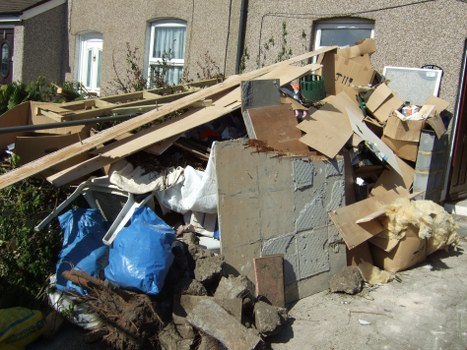
Business waste removal is suited to offices, shops, workshops and other commercial settings that need unwanted items cleared without turning the place upside down. We can remove furniture, filing material, packaging, redundant equipment, shelving and general waste from working premises. Office clearance and office clearances are particularly useful when a business is changing layout, vacating a site or replacing older fittings with something more suitable.
Commercial jobs often need a bit more coordination than domestic work because they may involve shared premises, working hours or items that should not be disturbed. It is worth separating what is being removed from what must remain in place, especially where desks, monitors, cabinets and archived items are mixed together. For some businesses, the aim is a partial clearance of surplus items; for others, it is a full emptying of a room, suite or storage area. The more clearly the scope is defined, the easier it is to plan the work responsibly.
We also help with commercial waste collection and commercial waste disposal where regular or repeat removals are more appropriate than a one-off visit. That can suit premises with steady waste output or sites that need periodic help clearing bulky accumulation. If you need a business clearance arranged with care and clarity, ask us for a quotation and outline the contents that need attention.
H3: Sorting, recycling and disposal choices
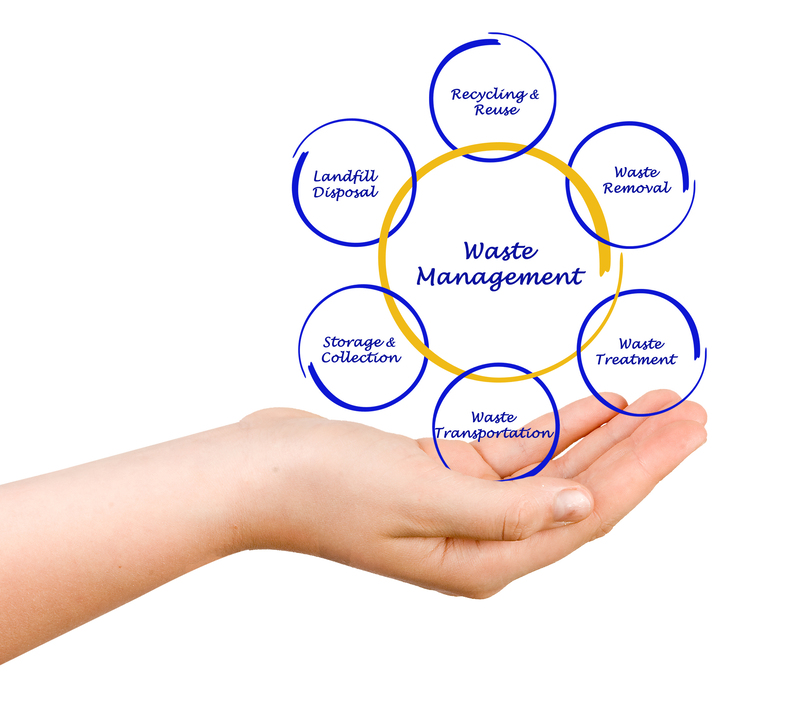
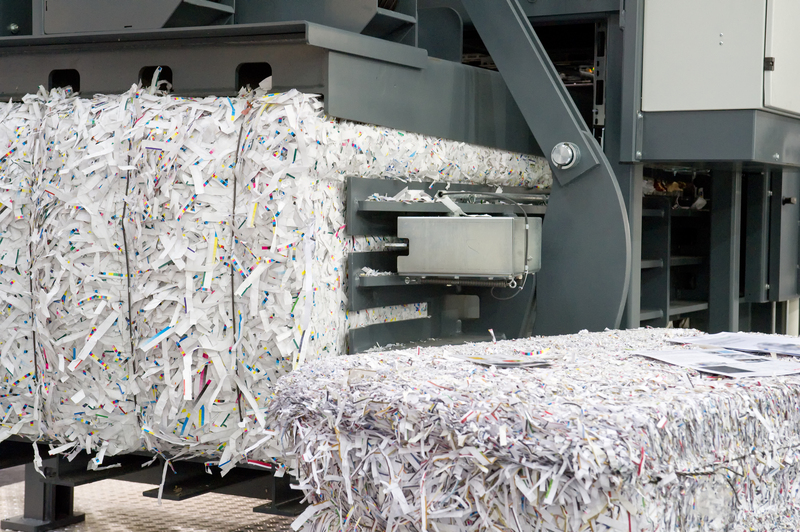
Not every clearance is just a case of taking everything away in one movement. The nature of the items matters, particularly when a job includes wood, metal, textiles, appliances or mixed household material. We work with the aim of sorting waste appropriately so the clearance is handled as sensibly as possible. That may include separating reusable-looking items from general rubbish and identifying materials that are better dealt with through recycling channels where suitable.
For customers, this can influence how the job is described at the quotation stage. A simple pile of bagged rubbish is different from a mixed load of furniture, white goods and loose waste, and the route for disposal may differ accordingly. We also offer recycling and rubbish handling for customers who want a more organised approach to what leaves the property. The point is not to overcomplicate the process, but to match the method to the contents.
Some clearances are mainly about speed and simplicity, while others need a more considered sort through the load. Where the contents are mixed, it helps to mention anything that is unusual, damaged or particularly heavy. That makes the work easier to plan and helps avoid surprise issues on the day. If you are unsure how to describe the items, a short list is enough to start the conversation.
About Junk Clearance
Junk clearance in the area sits within a wider London and south-east urban landscape where mixed housing, commercial streets and transport links have shaped the built environment over many decades. Many neighbourhoods include Victorian and Edwardian terraces, interwar estates, post-war redevelopment and newer infill buildings, so the local setting often combines older properties with later additions. Green space is another recurring feature, from municipal parks and riverside walks to smaller squares, commons and neighbourhood gardens that break up the denser street pattern. In central and inner districts, the street scene is typically more compact, with shops, schools, stations and workplaces close together; in outer districts, it is common to find wider roads, low-rise housing and more detached or semi-detached homes. Across the wider area, former industrial land, rail corridors and waterways have also left a clear mark on the way places are used and experienced today. Historic routes, place names and parish boundaries still shape local identity in many parts, while newer developments often sit alongside older civic buildings, church towers, terraces and warehouse conversions. Cultural life is similarly varied, with local theatres, galleries, community venues, markets and seasonal events giving different districts their own character. Parks and commons provide important open space, and river frontage in several districts adds a strong geographical thread. The result is a patchwork of neighbourhoods that can feel very different from one another while still sharing the same broad metropolitan context.
How to plan a clearer, more accurate quotation
When you are asking for a quotation, the most useful information is usually simple and specific. Tell us what the items are, where they are located and whether there are stairs, narrow access points or parking restrictions to consider. If the job includes a lot of mixed material, it helps to mention the broad categories rather than trying to measure everything precisely. That can be enough to indicate whether the work is a light collection, a room clear-out or a fuller property clearance.
Photographs can be especially helpful for bulky furniture, packed storage areas or jobs where the contents are spread across more than one room. They do not need to be staged; ordinary pictures are usually sufficient as long as they show the scale of the task. If you have a preferred time window or any access instructions, include those too. Keeping the enquiry clear means the quotation can be based on the right scope rather than on guesswork.
For some customers, the main decision is whether to clear everything at once or phase the work over separate visits. A phased approach can suit larger properties or sites with several storage areas, while a single visit may be better when the contents are already gathered together. Either way, a concise description helps us work out the most suitable approach. If you are ready to proceed, contact us and request a quotation.
Bulky waste, white goods and awkward loads
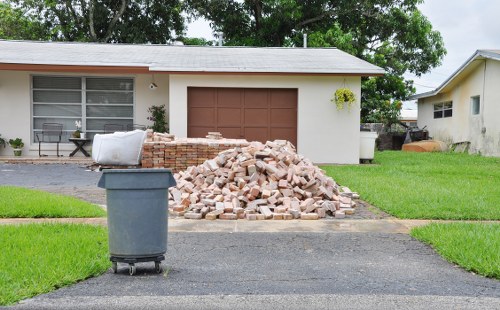
Some junk clearance jobs are dominated by awkward loads rather than loose clutter. White goods, broken appliances, old freezers, heavy desks and other cumbersome items can be difficult to remove without proper planning. Our bulky waste collection service is designed for exactly that kind of material, where the challenge is not just disposal but safe handling and sensible loading. We can also deal with large-item collection when a few oversized pieces are the main issue.
Kitchen and utility clearances often include a mix of appliances and furniture, and those jobs are usually easier when the main items are identified in advance. It is useful to say whether the item is freestanding, built in, already disconnected or still tucked in place. The same applies to anything that is too large for a standard domestic lift or staircase. A clear description helps us decide what sort of removal is needed and whether other waste should be grouped with it.
If your clearance is mainly about one or two difficult items, there is no need to overstate the job. A simple removal can be arranged as long as the items and access are described properly. Where a bigger mixed load is involved, we can take that into account and tailor the quote to the amount of work required. Ask for a quotation when you are ready, and we will base it on the actual bulky waste involved.
Junk clearance for different property types
Different properties tend to create different kinds of clearance work. A flat may involve stairs, lifts or shared entrances, while a house may have lofts, garages, basements and garden storage that all need separate attention. Business premises can add their own complications through office furniture, filing, equipment and stockroom waste. Because of that variation, junk clearance works best when the scope is matched to the property type rather than treated as a one-size-fits-all task.
Some customers need help after a tenancy change, while others are dealing with a build-up caused by years of storage or a recent refit. In either case, the main outcome is the same: remove the unwanted items, keep the process manageable and leave the area ready for whatever happens next. We can deal with one room, a cluster of rooms or a larger contents clearance, as long as the intended scope is clear. That makes it easier to arrange the right level of service.
Useful decisions often come down to what is staying, what is going and what needs special handling. If a job includes mixed rubbish and furniture, say so. If it is mostly clear waste bags with a few large pieces, say that too. The more accurate the description, the more useful the quotation will be. When you are set, send the details and request a quotation.