Junk Clearance and Sustainability: Our Commitment to Greener Waste Services
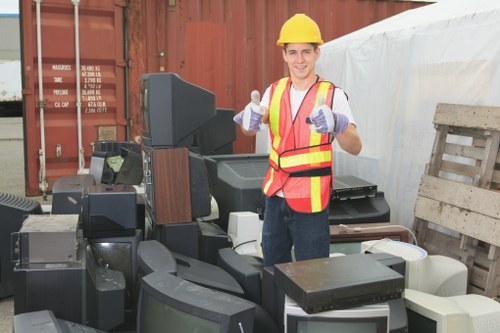 Junk Clearance isn't just about clearing space — it's about doing so responsibly. Our approach to sustainable junk removal balances practicality with environmental care: we prioritise reuse, maximise recycling, and minimise what goes to landfill. This page explains our recycling percentage target, how we work with local transfer stations, our partnerships with charities and community reuse centres, and the measures we take with low-carbon vans and route planning to lower our operational footprint.
Every collection is assessed on arrival so that items that can be repaired, repurposed or donated are diverted away from waste streams. We recognise local boroughs' kerbside recycling frameworks — many areas ask residents to sort paper, card, glass, mixed plastics and food waste — and we align our sorting practices to fit that model, making it easier to feed materials into regional Materials Recovery Facilities (MRFs) and composting schemes.
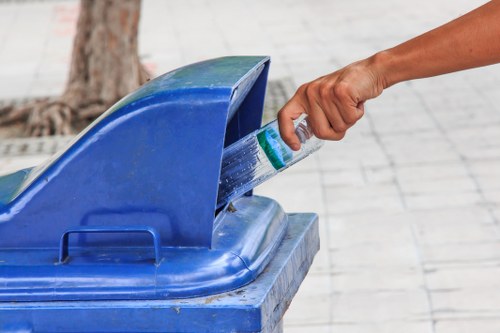 Our current goal is clear: achieve an 85% recycling and reuse rate of all collected materials by 2028, with an ambition to move toward 90% within the following two years. This recycling percentage target is backed by measured processes; we log weights for items sent to transfer stations, track donations to charities, and report the proportion of material directed to MRFs versus reuse channels. By measuring continuously we can improve performance year on year.
Local Transfer Stations and Responsible Processing
We partner with accredited local transfer stations and MRFs so that recyclable materials are handled according to the best available standards. Rather than consolidating mixed waste into an unknown stream, we segregate on-site and hand off separated loads to facilities specialised in processing paper, metals, glass and mixed plastics. Organic waste is directed to municipal composting where available, helping close the nutrient loop.We also operate with an emphasis on traceability: each vehicle run is logged, and loads are tagged to indicate composition and destination. This ensures transparency when material is weighed and recorded at transfer stations and helps us refine how we sort at collection points. Accountability drives improvement, and our partnerships with local infrastructure are designed to support municipal recycling schemes rather than bypass them.
Partnerships With Charities and Community Reuse
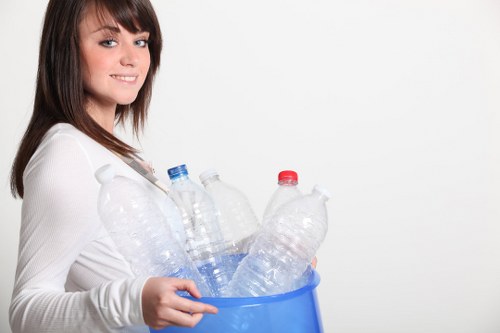
Giving items a second life is a core pillar of our waste clearance services. We work with a network of charities, social enterprises and community reuse centres to donate furniture, textiles, appliances and other usable items. Our charity partners benefit from reliable inflows of usable goods and we benefit from reduced landfill volumes. Examples of partnership activity include:- Local charitable reuse centres that accept household furniture and small electricals after testing and refurbishment.
- Community projects that repurpose building materials and surplus timber for social housing or community redevelopment.
- Specialist textile banks for clothing and linen which are sorted for reuse or recycling.
These collaborations are not only about diversion; they generate social value. Donated items support people in need, local training programmes and repair workshops, forming a circular loop that keeps useful products moving through the community rather than being destroyed.
In boroughs with strict separation requirements, such as separate collections for textiles and small electricals, our teams make special efforts to pre-sort and label donations so that drop-off at partner hubs is smooth and compliant with local authority rules.
Fleet choices and operational design are essential to cut carbon. We have invested in low-carbon vans including plug-in hybrids and fully electric vehicles for short urban runs, and we deploy diesel Euro-6 standard vehicles only where necessary for longer trunking to transfer stations. Vehicle telematics, live route optimisation and consolidated collections help to reduce total miles travelled and time on road.
Staff training reinforces low-carbon behaviour: drivers use eco-driving techniques, we prioritise multi-stop planning to reduce empty running, and we favour last-mile solutions such as cargo bikes for narrow urban streets where permitted. All these measures combine to lower emissions from collection activity while maintaining reliable junk pickup services.
 Sustainable procurement also matters: where we need replacement equipment (trolleys, straps, protective covers), we favour durable, repairable supplies and recycled-content products. Reducing single-use plastics in our logistics and choosing reusable containment reduces waste upstream and sets a practical example for responsible operations in the local recycling ecosystem.
![A smiling young man with dark hair and a light purple shirt stands in a domestic kitchen, holding a blue recycling bin filled with empty glass bottles and jars, some with metal caps visible. Behind him, a woman with brown hair tied back, wearing a light grey sweater, is seen in profile, looking toward the background. The kitchen features wooden cabinets, a countertop with a sink, and a small green storage bin. Natural light illuminates the space, highlighting the textures of the glass containers and wooden furniture. The scene depicts an environmentally conscious activity related to household rubbish and recycling, aligning with the services offered by Junk Clearance in areas like [TOWN] or [POSTCODE]. The overall atmosphere is clean, orderly, and focused on waste separation and sustainability efforts within a typical UK home environment.](/pub/_photos/rubbish/f1345071104.jpg) Monitoring, continuous improvement and community engagement complete our sustainability approach. We publish annual summaries of our diversion rates and recycling percentage targets, report improvements in vehicle emissions, and host community collection events to encourage reuse. We also support local authority campaigns that encourage residents to separate waste at source — when customers pre-sort (e.g., paper, card, glass, mixed plastics, food) it makes our job and the MRFs' work decisively more effective.
Monitoring, continuous improvement and community engagement complete our sustainability approach. We publish annual summaries of our diversion rates and recycling percentage targets, report improvements in vehicle emissions, and host community collection events to encourage reuse. We also support local authority campaigns that encourage residents to separate waste at source — when customers pre-sort (e.g., paper, card, glass, mixed plastics, food) it makes our job and the MRFs' work decisively more effective.
Our waste clearance and junk collection services are therefore more than removal: they are an integral part of a circular, low-carbon local economy. Through measured targets, strong transfer-station partnerships, charity collaborations and a low-emission fleet, we reduce landfill dependence and support the community. Every load we handle is an opportunity to recover value, reduce carbon and support local reuse.
Join our effort by choosing a waste clearance provider that treats sustainability as central. Together we can meet ambitious recycling percentage targets, get more items back into productive use, and operate transport with a much smaller carbon footprint — a practical path to greener neighbourhoods and responsible Junk Clearance for all.