Health and Safety Policy for Junk Clearance Operations
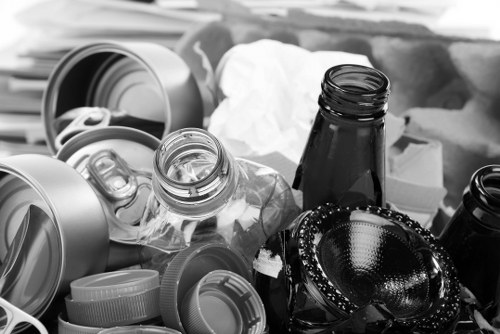 This Health and Safety Policy sets out the commitment and approach for safe and efficient junk clearance and related removal services. It applies to all staff, contractors and temporary workers involved in rubbish clearance, debris removal and waste clearance activities. The objective is to prevent injury, protect property, reduce environmental harm and ensure that every junk removal job is carried out with due care.
Managers and supervisors are responsible for implementing this policy and ensuring that safe systems of work are in place. All employees must follow safe work practices, attend required training, and report hazards or incidents promptly. The policy covers worksite assessments, manual handling, vehicle safety, use of tools and plant, handling of hazardous materials and appropriate disposal procedures for items removed during junk haulage.
![On a paved driveway next to a green grass verge, a blue plastic recycling bin bearing the standard recycling symbol is filled with clear plastic bottles and a few cardboard or paper containers, indicative of household rubbish collection. Behind the bin, a full black rubbish bag is leaning against it, likely containing additional waste. The scene is outdoors, with natural daylight illuminating the area, and the surroundings suggest a residential area in the vicinity of [TOWN] or [POSTCODE]. The presence of the bin and waste materials relates to general rubbish removal services offered by Junk Clearance. The pavement's pattern comprises interlocking bricks, and the background features a well-maintained lawn, emphasizing the outdoors environment typical for domestic waste disposal tasks.](/pub/_photos/rubbish/f1390487552.jpg) Risk assessment is central to our approach. Before any clearance or rubbish removal task begins, a competent person will perform a site evaluation to identify potential risks such as hidden sharps, asbestos-containing materials, unstable structures, traffic hazards and biological contamination. Findings will inform control measures and method statements to minimise risk during debris removal operations.
Risk assessment is central to our approach. Before any clearance or rubbish removal task begins, a competent person will perform a site evaluation to identify potential risks such as hidden sharps, asbestos-containing materials, unstable structures, traffic hazards and biological contamination. Findings will inform control measures and method statements to minimise risk during debris removal operations.
Control measures emphasise the hierarchy of risk control: eliminate, substitute, engineer, administer and use personal protective equipment. Wherever possible, items will be removed mechanically to eliminate manual handling. When manual handling is necessary, teams will use correct lifting techniques, mechanical aids and planned lifts to reduce strain and injury during junk clearance activities.
Personal Protective Equipment and Clothing
Appropriate PPE must be provided and worn for each task. Typical items include high-visibility clothing, gloves suitable for the expected hazards, safety boots with toe protection, eye protection and respiratory protection where dust or contaminants are present. PPE use is a last line of defense and must be combined with other controls for effective waste clearance safety.
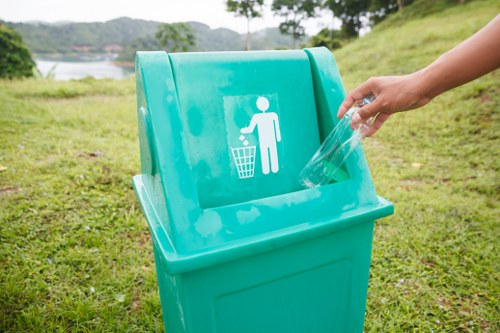 Training and competence are essential. All operatives involved in waste clearance and rubbish removal will receive induction training, task-specific instruction and periodic refreshers. Training covers manual handling, safe use of tools and equipment, vehicle loading and unloading, segregation of recyclable materials and identification of hazardous waste streams requiring specialist handling.
Vehicle and equipment safety form a key part of this policy. Vehicles used for junk haulage must be maintained, inspected pre-shift and operated only by trained personnel. Load security, safe loading heights and stability must be confirmed prior to transit. Equipment such as compactors, lifts and winches must have current maintenance records and be used in accordance with manufacturer instructions.
Handling Hazardous and Controlled Materials
Items potentially hazardous — including chemicals, batteries, paints, solvents and electronic waste — require segregation, appropriate containment and transfer to authorised disposal or recycling channels. If suspected asbestos or biological contamination is encountered, work will stop and a qualified assessor engaged. Under no circumstances should untrained staff attempt to handle unknown hazardous materials during debris removal.
Safe site practices for junk removal include clear exclusion zones, appropriate signage, traffic management for on-street work, and protection for public access points. Tools, cords and debris must not create trip hazards. Work areas will be kept tidy to reduce slip, trip and fall incidents and to protect both workers and members of the public.
 Emergency response and incident management procedures are defined and communicated to all staff. First aid provision, emergency contacts and evacuation plans are available on every job. Incidents, near misses and unsafe conditions must be reported immediately so corrective actions can be implemented and lessons shared to prevent recurrence in future junk clearance or waste collection tasks.
Monitoring, auditing and continual improvement underpin the policy. Supervisors will conduct periodic inspections of clearance sites and vehicle loads, review incident records and ensure compliance with this safety policy. Performance will be monitored through safety observations and records of training, equipment checks and risk assessments.
![A cluttered outdoor scene of discarded electronic waste, including various old computer monitors, CRT televisions, and miscellaneous electronic devices, all piled on a paved surface likely on a driveway or open yard area. The collection features a mix of materials such as plastic, glass, and metal, with some devices showing visible screens, buttons, and cables, predominantly in shades of black, gray, and brown. In the background, there is a grassy area with a red fence and a large truck or container partly visible, indicating a rubbish removal operation, possibly by Junk Clearance serving areas including [POSTCODE] and [TOWN]. The lighting suggests a bright day with natural sunlight illuminating the scene, emphasizing the various textures and the disorganized nature of the waste. The image is representative of electronic waste disposal, relevant to rubbish collection services in the UK helping property owners or businesses manage waste responsibly, especially in residential or commercial outdoor environments.](/pub/_photos/rubbish/f1351178240.jpg) Responsibilities are allocated as follows:
Responsibilities are allocated as follows:
- Senior management: sets policy, provides resources and ensures a safety culture for all rubbish clearance activities.
- Supervisors: implement controls, verify competence and maintain documentation for each removal operation.
- Operatives: follow safe work methods, use PPE, report hazards and participate in training for debris removal tasks.
Documentation and record keeping support safe operations. Job briefs, risk assessments, equipment checklists and training records will be retained to demonstrate due diligence in every junk clearance exercise. Regular review of records ensures policies remain relevant to evolving materials, equipment and working environments.
In summary, this policy emphasises a proactive, structured approach to safety during junk removal and waste clearance. By combining competent planning, appropriate controls, training and clear responsibilities, the risks associated with rubbish clearance, debris removal and junk haulage are managed effectively to protect people and property.
The policy will be reviewed annually and updated as necessary to reflect operational changes, new equipment or lessons learned from incidents. Commitment to safety is a condition of employment and a key measure of service quality in all clearance operations.